Eastern & Western Perspectives
on Positive Psychology

Learning Objectives
Distinguish Worldviews
Compare fundamental ontological & epistemological assumptions between Western and Indian psychology.
Role of Culture
Understand how culture shapes definitions of happiness, emotional arousal, and subjective well-being.
Indian Frameworks
Explore indigenous models: Pancha-Kosha, Tri-Guṇa, and Sthita-Prajñā (steady wisdom).
Spiritual & Mind Practices
Appreciate holistic traditions: Patañjali’s Aṣṭāṅga Yoga, Vipassanā meditation, and Prāṇāyāma.
Sustainable Happiness
Examine eco-psychological harmony, Sarvodaya (welfare of all), and overcoming consumerist individualism.
3.2 Introduction: Expanding the Horizon
Universal Goal, Diverse Paths
All human civilizations seek happiness, meaning, and freedom from suffering—yet the philosophical assumptions about how to achieve them differ fundamentally across cultures.
Beyond WEIRD Psychology
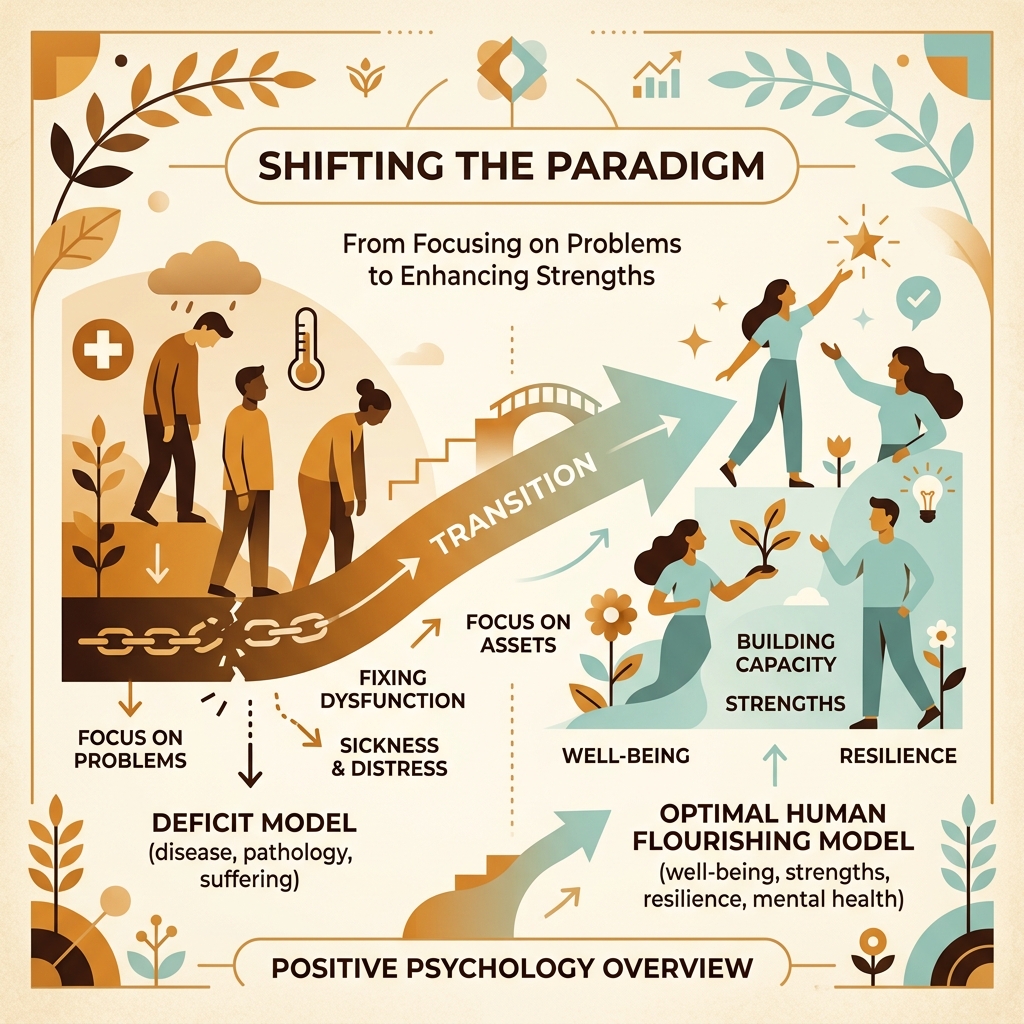
Historically, main-stream psychology drew heavily from Western, Educated, Industrialized, Rich, and Democratic populations. Positive Psychology actively incorporates ancient Eastern insights for a truly global science of human flourishing.
3.3 Core Philosophical Distinctions
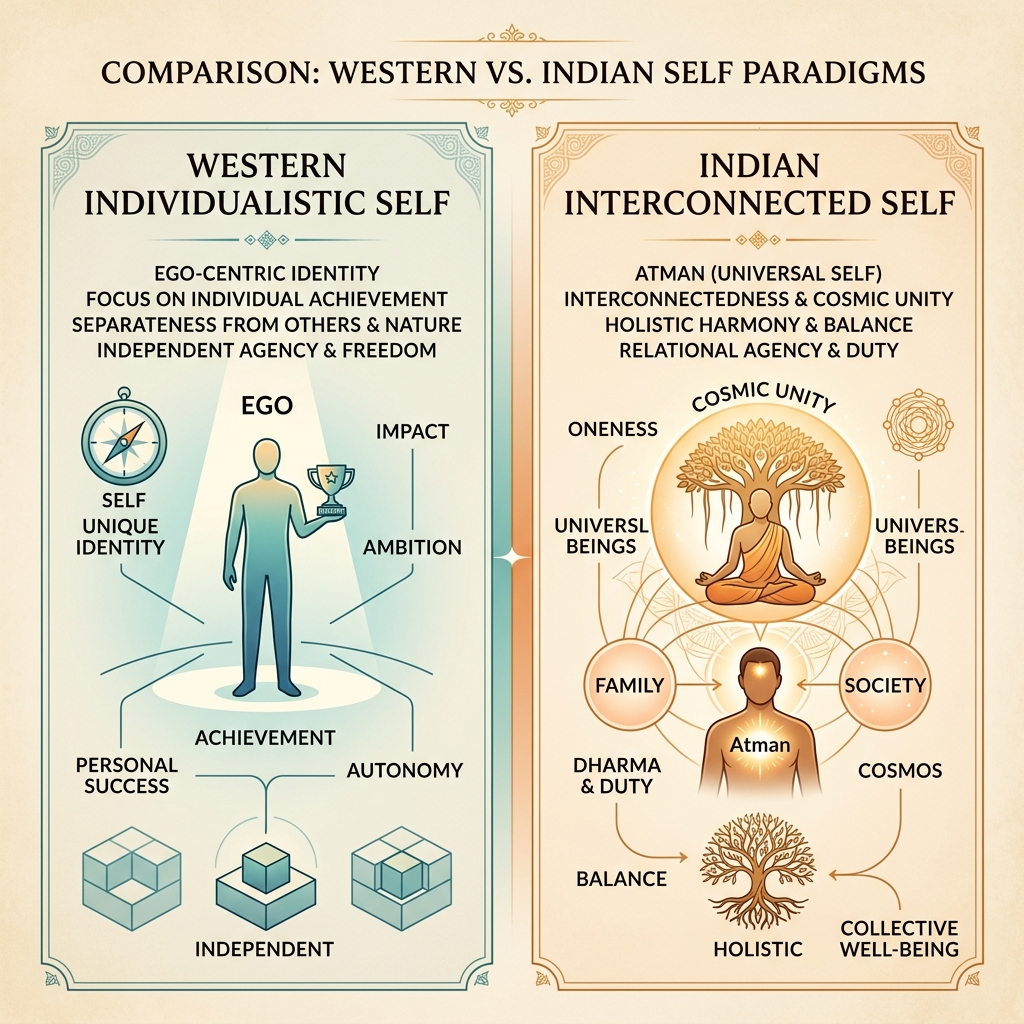
Western Paradigm: Analytical & Material
Primarily linear, empirical, reductionist, and action-oriented. Focuses on changing external conditions, mastering the environment, and building personal agency (Self-Efficacy).
Indian Paradigm: Synthetic & Experiential
Primarily holistic, intuitive, consciousness-centered, and self-regulatory. Focuses on mastering internal consciousness, transcending ego-boundaries, and achieving inner peace (Śānti).
3.4 Cultural Definitions of Happiness
| Cultural Dimension | Western Construct (Independent) | Eastern / Indian Construct (Interdependent) |
|---|---|---|
| Primary Focus | Individual self-esteem, personal accomplishment, high-arousal positive affect (excitement, joy). | Relational harmony, fulfilling social duties (Dharma), low-arousal affect (calmness, serenity). |
| Self-Construal | Ego-bounded, distinct identity separate from others and nature. | Fluid, relational self linked with family, community, and cosmic existence (Ātman). |
| Well-Being Metric | Maximizing personal pleasure & minimizing pain (Hedonism / Eudaimonia). | Inner balance (Samatva), desirelessness (Niṣkāma), and spiritual liberation (Mokṣa). |
3.5 Foundations of Indian Psychology
1. Consciousness as Primary
Mind (Citta) is a subtle material instrument used by the pure witnessing Consciousness (Purusha / Ātman).
2. Self-Realization Goal
Highest well-being is realizing one's true divine nature, transcending illusory identification with the body-mind (Māyā).
3. Integral Health
Health is Svastha (abiding in one's true self)—integrating physical, mental, social, and spiritual dimensions.
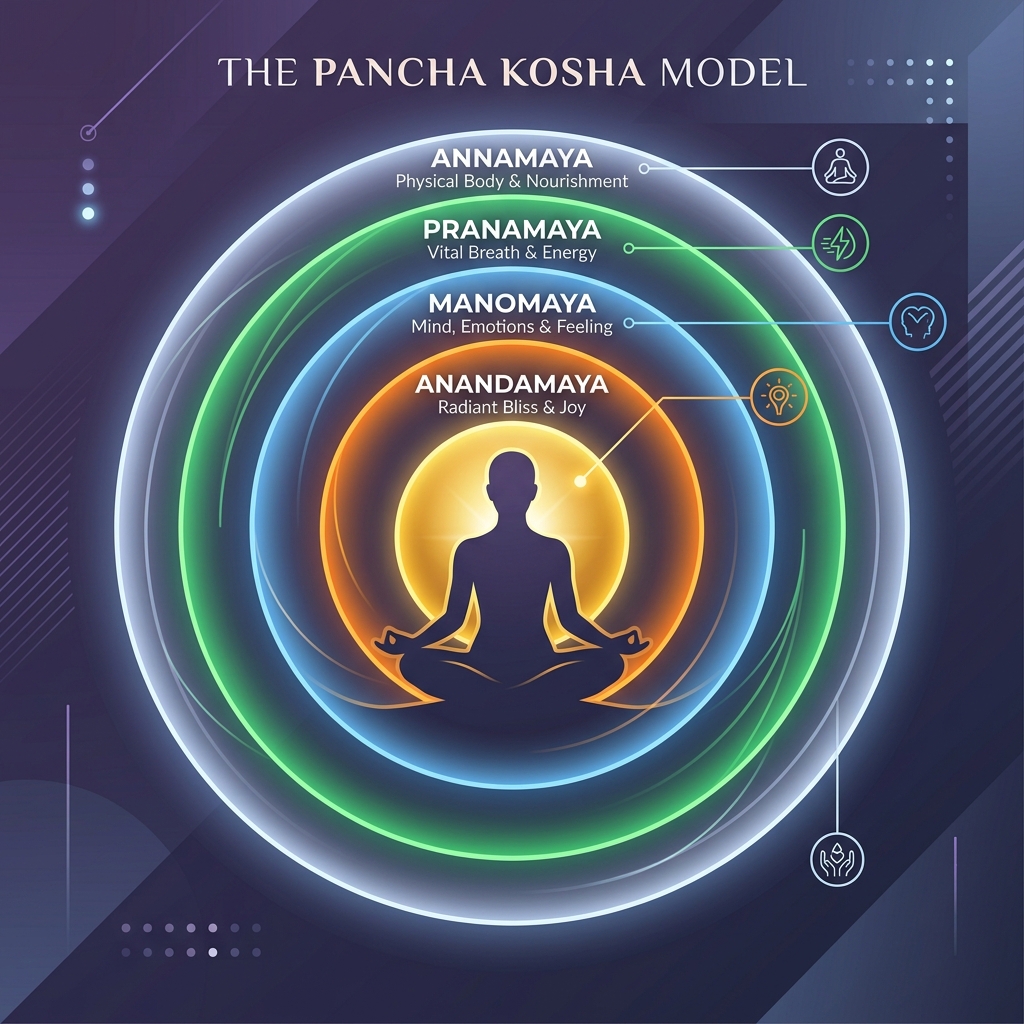
The Pancha-Kosha Model of Human Existence
- 1. Annamaya Kosha: Physical/Food sheath (body, health, nutrition).
- 2. Pranamaya Kosha: Vital Energy sheath (breath, prāṇa, vitality).
- 3. Manomaya Kosha: Mental/Emotional sheath (thoughts, sensory processing).
- 4. Vijnanamaya Kosha: Intellectual sheath (wisdom, discernment, Buddhi).
- 5. Anandamaya Kosha: Bliss sheath (deep peace, spiritual oneness).
The Tri-Guṇa & Tri-Doṣa Framework
Sattva (Purity & Light)
Qualities: Harmony, clarity, truthfulness, compassion, contentment. Cultivated through self-reflection & ethical living.
Rajas (Passion & Action)
Qualities: Ambition, desire, restlessness, sensory craving, competition. Leads to attachment & emotional fluctuations.
Tamas (Inertia & Darkness)
Qualities: Lethargy, ignorance, confusion, apathy, resistance to growth. Results in psychological stagnation.
Concept of Sthita-Prajñā (Steady Wisdom)
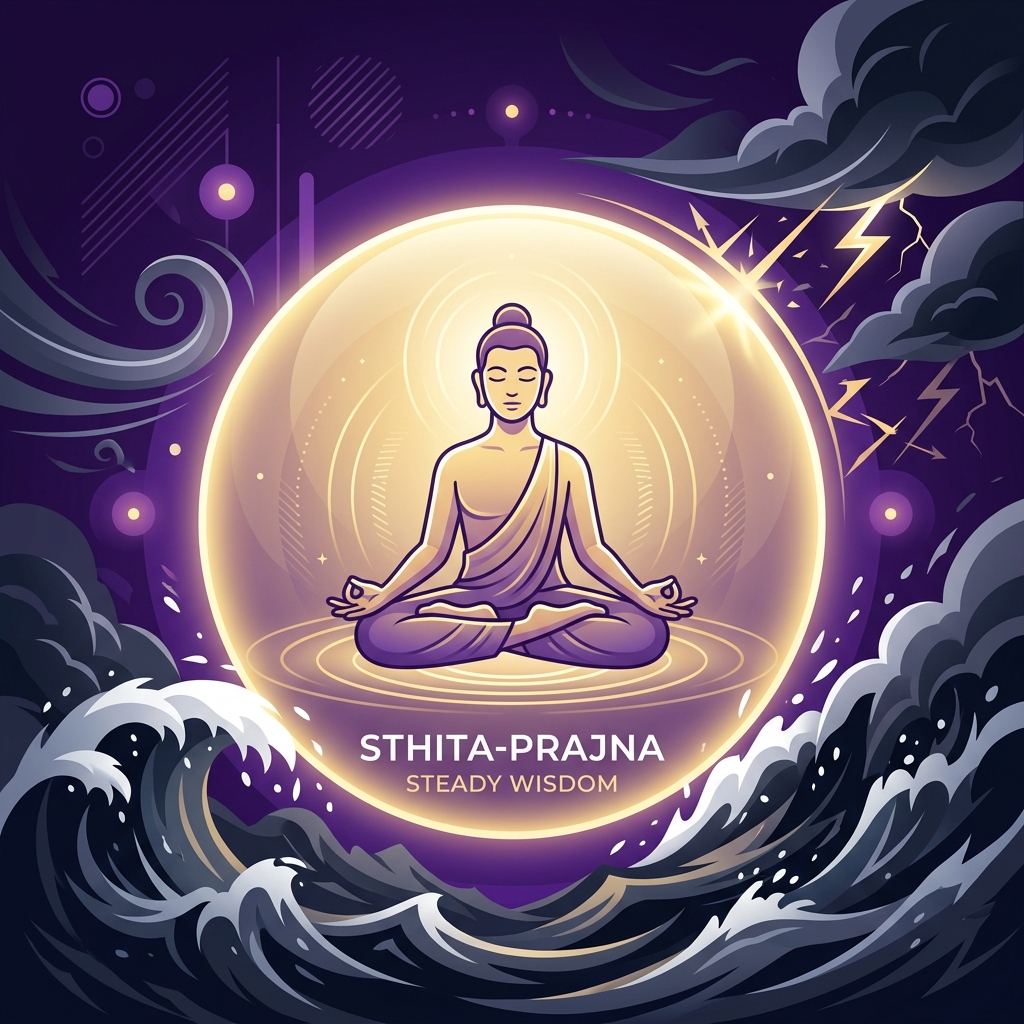
A Sthita-Prajña is one who remains unagitated in sorrow, unattached to pleasure, and free from desire, fear, and anger.
The Four Puruṣārthas (Aims of Human Life)
1. Dharma (Ethical Righteousness)
The moral foundation guiding conduct, duty, harmony, and responsibility toward society and nature.
2. Artha (Material Prosperity)
Pursuit of wealth, security, and material resources needed to sustain life ethically and responsibly.
3. Kāma (Pleasure & Love)
Fulfillment of sensory, aesthetic, and emotional desires guided by Dharma.
4. Mokṣa (Spiritual Liberation)
The ultimate goal: freedom from ignorance, egoic attachment, and the cycle of suffering.
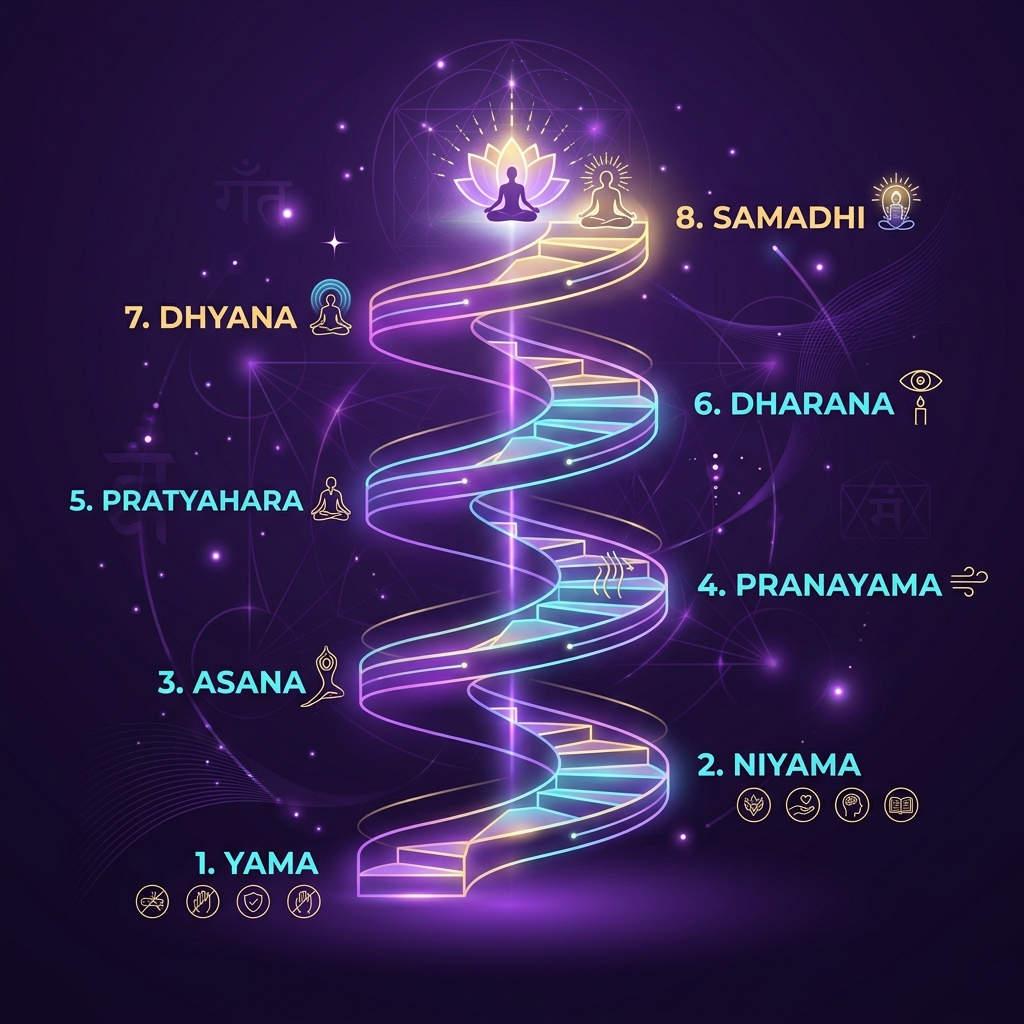
Patañjali's Aṣṭāṅga Yoga System
- Yama: Ethical Social Restraints (Ahiṁsā, Satya, Asteya, Brahmacarya, Aparigraha)
- Niyama: Personal Disciplines (Śauca, Saṁtoṣa, Tapas, Svādhyāya, Īśvarapraṇidhāna)
- Āsana: Steady Posture
- Prāṇāyāma: Breath Regulation
- Pratyāhāra: Sensory Withdrawal
- Dhāraṇā: Single-pointed Concentration
- Dhyāna: Meditation
- Samādhi: Absorbed Oneness
Buddhist & Mind Contemplative Traditions
Buddhist Psychology & Vipassanā
Emphasizes mindfulness (Sati), non-attachment, insight into impermanence (Anicca), and overcoming suffering through the Eightfold Path.
Jainism & Sufi Perspectives
Jainism highlights non-violence (Ahiṁsā) & non-possessiveness (Aparigraha); Sufism emphasizes heart-purification & unconditional divine love.
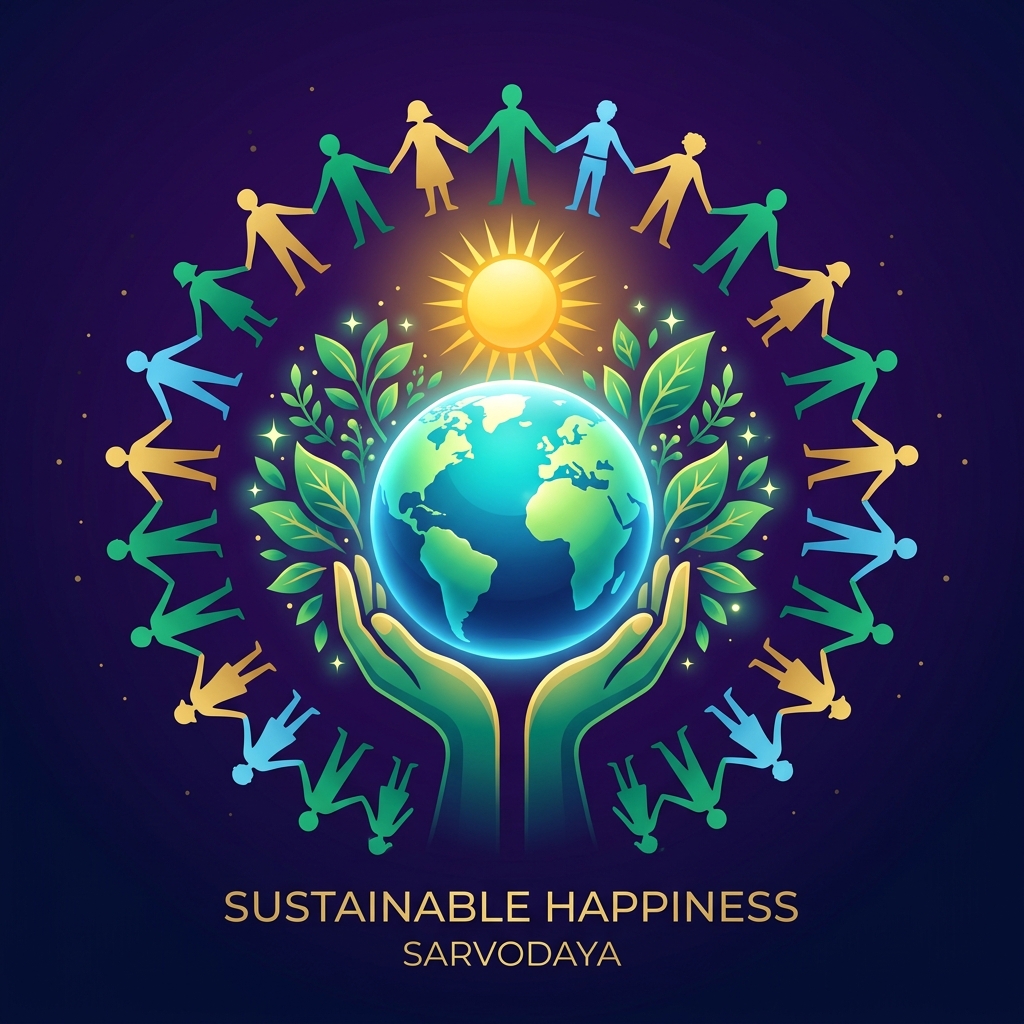
3.6.1 Sustainable Happiness & Sarvodaya
Sustainable happiness is well-being that contributes to individual, social, and environmental flourishing without exploiting others or nature.
Sarvodaya (Welfare of All)
Shift from consumerist individualism to collective harmony, ethical consumption, and deep ecological interconnectedness.
Key Teaching Takeaways
Indian psychology integrates body, mind, and spirit through models like Pancha-Kosha and Aṣṭāṅga Yoga, moving beyond Western cognitive-behavioral limits.
True happiness comes from internal regulation, self-realization (Ātman), and steady wisdom (Sthita-Prajñā), rather than external sensory pursuit.
Enduring well-being requires moving from egoic individualism to eco-social harmony (Dharma), and sustainable happiness for all.
Thank You for Learning with Us!